


TL;DR
- Vietnam offshore development typically cuts engineering cost 50–60% versus the US or Western Europe, with mid-level engineers around $1,000–2,000 per month fully loaded.
- The sticker rate isn't the risk — rework, silence, and a weak bridge role are. Cheap teams that build the wrong thing cost more than they save.
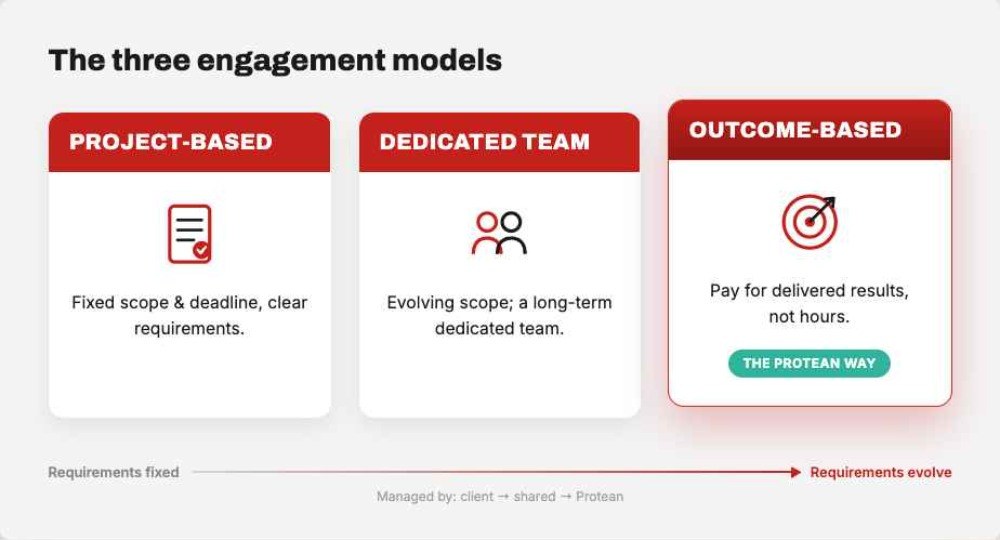
- There are three ways to engage: project-based, a dedicated (labo) team, and outcome-based delivery. Match the model to how stable your requirements are.
- AI is rewriting the economics: as assistants generate more of the code, value shifts from cheap hours to judgment (or quality control) — which is exactly what outcome-based delivery sells.
- Protean Studios is a Japan-led team in Vietnam. We tie our fee to results: system stable in 90 days, or we work free.
Most teams don't come to us for their first offshore project. They come for their second — after the first one taught them an expensive lesson. The demo looked fine. The rate was a third of a local hire. Then the sprint updates got vague, the "done" tickets didn't match the staging build, and three months in someone realized the team had been quietly building the wrong thing. The savings evaporated into rework.
That story is common enough that it shapes how buyers now shop. So this guide skips the brochure language. Here's what Vietnam offshore development actually costs in 2026, how the engagement models differ, and the specific signals that separate a real engineering partner from a body shop.
What does Vietnam offshore development cost in 2026?
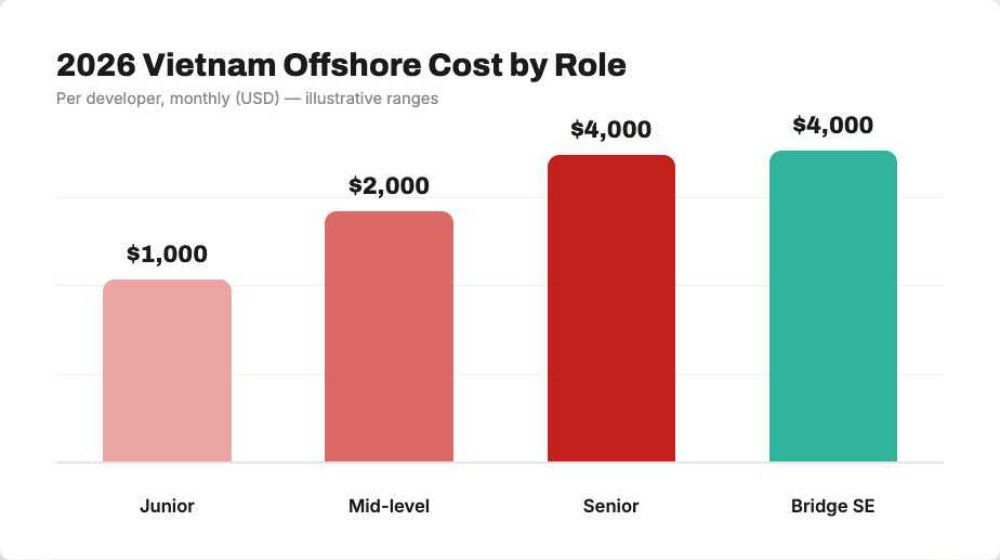
Straight answer: expect roughly $10–20 per hour depending on seniority, or about $1,000–2,000 per developer per month once benefits and overhead are counted. For most Western buyers that lands at a 50–60% saving versus hiring the same seniority at home.
Here's the 2026 picture by role:
| Role | Typical monthly (fully loaded) | Notes |
|---|---|---|
| Junior developer | $400 ~ 1,000 | Best for well-specified, supervised work |
| Mid-level developer | $1,000 ~ 2,000 | The workhorse of most teams |
| Senior engineer | $2,000+ | Architecture, code review, mentoring |
| Bridge lead / BrSE | Premium on top | Owns requirements and cross-culture communication |
Two honest caveats the listicles skip.
- First, rates in Vietnam have crept up year over year as the market matures, so 2026 is not the bargain 2018 was — you're buying stability now, not just cheap hours.
- Second, the "hidden" costs are real: employer social insurance, a customary 13th-month salary, and 15–25% management overhead. A partner who hides those in a suspiciously round number is a partner who will surprise you later.
Why Vietnam, and where it actually wins
Vietnam sits alongside India, Poland, and the Philippines as a top offshore destination, but its edge is specific.
- Attrition is lower than India's, which matters more than the headline rate — the real cost of offshore isn't the hourly, it's the churn when a key engineer walks six weeks before launch.
- There's a deep bench of Japanese- and English-speaking staff, and the time zone overlaps a working day with Tokyo, Singapore, and Sydney (a two-hour gap with Japan).
Where it doesn't automatically win: tiny one-off jobs. If your project is 200 hours of work, the coordination overhead can eat the savings. Offshore pays off when the relationship runs long enough to build shared context.
The three engagement models — and how to pick one
1. Project-based
Fixed scope, fixed price, defined finish line. Ideal when the requirements genuinely won't move. Risky when they will, because every change becomes a renegotiation. See our project-based development model.
2. Dedicated (Labo) team
You get a standing team that works only for you, month to month, running your backlog and your ceremonies. Best for products with a living roadmap. This is our Labo development model.
3. Outcome-based
You don't buy hours; you buy a defined result, and the fee is tied to hitting it. This is where we've planted our flag, because it aligns the only two things that matter — your outcome and our incentive. It's the heart of our outcome-based offshore approach.
| Model | Requirements | You manage | Best for |
|---|---|---|---|
| Project-based | Fixed & clear | Acceptance only | Defined, stable scope |
| Labo / dedicated | Evolving | The team & backlog | Long-lived products |
| Outcome-based | Goal is clear, path isn't | The result, not the hours | Buyers who want risk shared |
How to choose a partner without getting burned
- A strong bridge role
One person must own requirements, translation (literal and cultural), and delivery. Where communication breaks, projects break. - They ask uncomfortable questions early
A partner who accepts a vague brief without pushback is one who will build exactly what you didn't mean. - Working software every sprint, not status decks
If you can't pull a running build every two weeks, "80% done" means nothing. - They'll tell you when offshore is the wrong call
Honesty about fit is the cheapest insurance you'll ever get.
How we run delivery: agile, not a black box
The failure mode of offshore is the black box — you hand over a spec and hope.
We run the opposite: short sprints, a demo you can click at the end of each one, shared boards, and daily overlap hours for the decisions that can't wait for email. Distance isn't the problem in distributed teams; missing feedback loops are.
We go deeper in our companion piece on the agile offshore development model.
What AI is doing to Vietnam offshore development
The obvious question in 2026: if an AI assistant can write the boilerplate, why offshore it at all?
Because the assistant changed what you're paying for, not whether you need a team. Generative coding tools now handle a large share of routine work, and Vietnamese firms have leaned in hard — the country has over 500,000 IT professionals, with an estimated 85,000 focused on deep learning and AI orchestration and more than 300,000 specialising in AI/ML. The result is teams that ship faster: recent estimates put Vietnamese output at 80–90% of Silicon Valley productivity for roughly 25–30% of the total cost.
But here's the part the hype misses. When AI writes more of the code, the code stops being the scarce thing. Judgment becomes scarce — knowing what to build, catching the subtle bug the model introduced, owning the architecture the assistant can't see. Cheaply generated code that's wrong is still wrong, just faster. So the old arbitrage — "buy cheap hours" — is fading, and a new one takes its place: buy the outcome, and let the team decide where AI helps and where a human has to.
That's the lens for judging any "AI-native" offshore pitch. The right partner uses AI to raise quality and speed under human review — not to ship more untested code and quietly grow your technical debt. Ask how they use AI in code review, testing, and requirements, and who signs off on what the model produced.
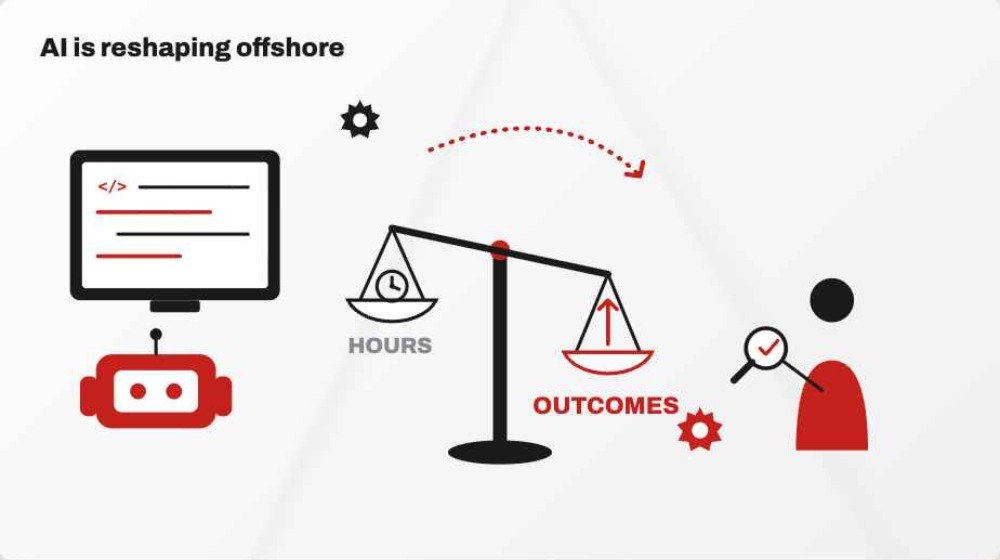
Outcomes over hours
You were never trying to buy developer-hours. You were trying to buy a system that works, shipped on a date you can plan around. On a typical Labo engagement a team reaches full velocity in four to six weeks; on outcome-based work we put our fee on the line against a result we agree up front. If the system isn't stable in 90 days, we keep working at no charge until it is.
Frequently asked questions
How much does it cost to hire an offshore developer in Vietnam?
Roughly $10–20 per hour by seniority, or about $1,000–2,000 per developer per month fully loaded. Most Western buyers see a 50–60% saving versus hiring the same seniority locally.
Is Vietnam better than India for offshore development?
Vietnam's advantage is lower attrition and stability, plus strong Japanese- and English-speaking talent and a friendlier Asia-Pacific time-zone overlap. The saving versus India is more about avoided churn than a lower rate.
What's the difference between project-based, Labo, and outcome-based models?
Project-based is fixed scope and price for stable requirements. A Labo (dedicated) team runs your evolving backlog month to month. Outcome-based ties the fee to an agreed result rather than hours.
What are the hidden costs of offshore development?
Employer social insurance, a customary 13th-month salary, management overhead of about 15–25%, and ramp-up time in the first weeks.
How do I avoid a failed offshore project?
Insist on a strong bridge role, a running build every sprint, and a partner who challenges a vague brief. Most failures trace back to a broken feedback loop, not distance or skill.
Will AI replace offshore developers in Vietnam?
No — it changes what they do. AI assistants automate routine coding, so the value shifts to judgment: architecture, testing, requirements, and AI orchestration. Vietnam has leaned in, with 300,000+ developers now specialising in AI/ML. The winners buy outcomes, not hours an AI can now produce.
Thinking about offshore — or fixing one that went sideways?
Book a free 30-minute scoping call.
We'll tell you honestly whether Vietnam offshore is the right move for your product, and how an outcome-based team would approach it.
Our promise to SME clients: system stable in 90 days, or we work free.